
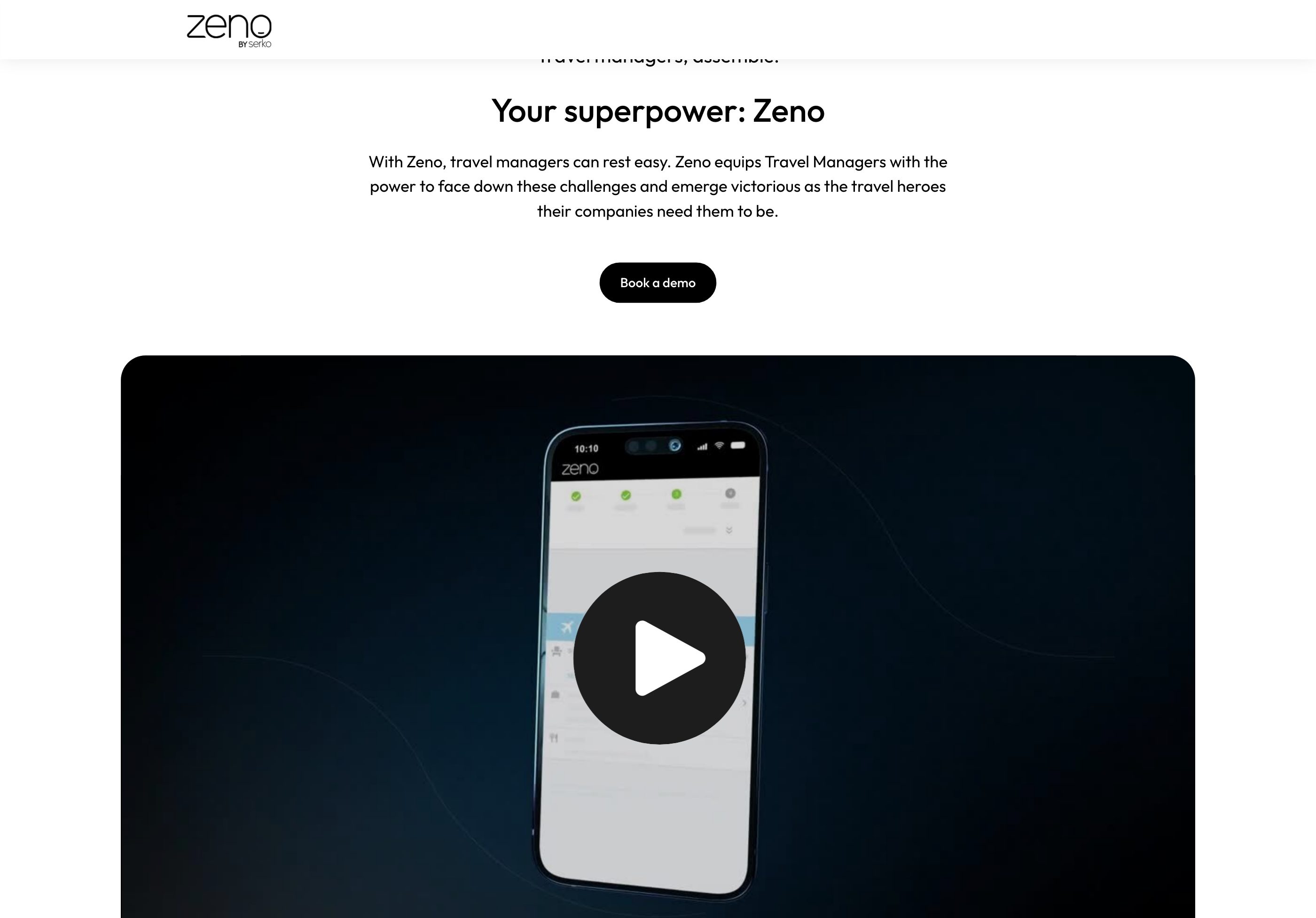
One page, one job.
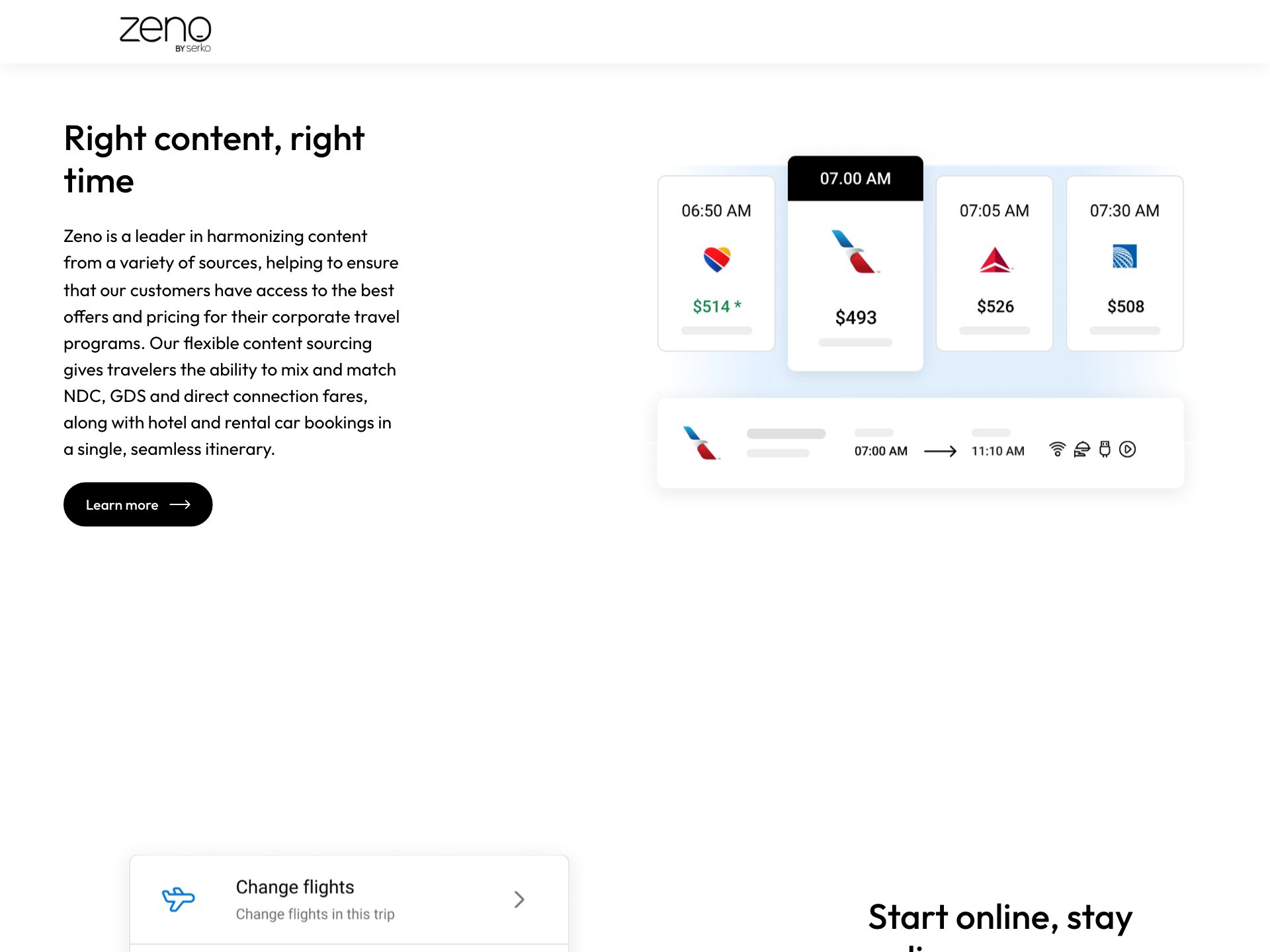
Zeno is a corporate travel management platform: booking, policy and expenses in one place, with content harmonised across NDC, GDS and direct connection fares so a trip can be assembled from the best of each. The Travel Hero campaign speaks to the person who carries all of that internally — the travel manager, whose work is only visible when it goes wrong.
UrbanIQ worked on the campaign concept, the build and the components behind it. A landing page is not a small website. It has no navigation to wander into and nowhere else to go, which means every element either moves someone toward one action or gets cut.
Chapter One
Entry · The Brief
A metaphor,
that has to work.
✦
The campaign casts the travel manager as the hero and Zeno as the superpower. It is a real risk: a cape on an enterprise page can read as a company amusing itself. It works here because the difficulties named first are the actual ones — a shifting distribution landscape, travellers who are unhappy, costs pushed up by bookings made outside policy — so the flattery arrives after the recognition.
That pulls two ways at once. The concept has to carry enough feeling to be remembered, and the proof underneath has to stay literal enough to be believed by someone who evaluates booking tools for a living. Costume on top, specifics underneath — and the moment those two swap places, the page stops working.
-
01
Node.Challenge Register
Costume, or credibility.
Enterprise software buyers are practised at discounting enthusiasm. A hero metaphor invites exactly that reflex, and once a reader decides a page is performing at them, nothing later in it recovers the ground.
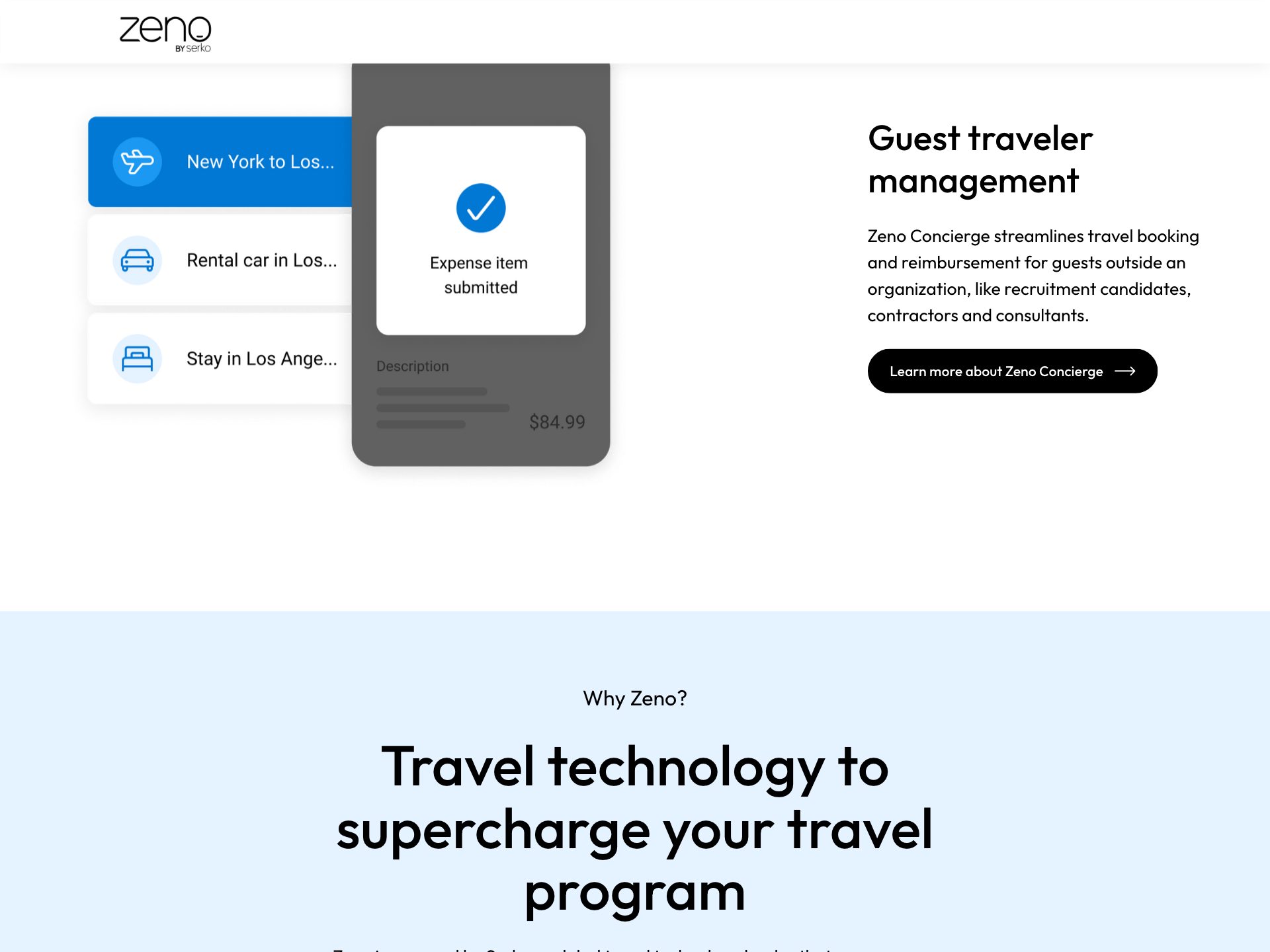
So the concept holds the top of the page and then steps aside. Below it the claims are ordinary and checkable: fares from several sources in one itinerary, self-service that removes a call to the agency, guest booking for people who do not work there. The metaphor sets the mood; it never carries an argument.
-
02
Node.Challenge Conversion
Every field is a tax.
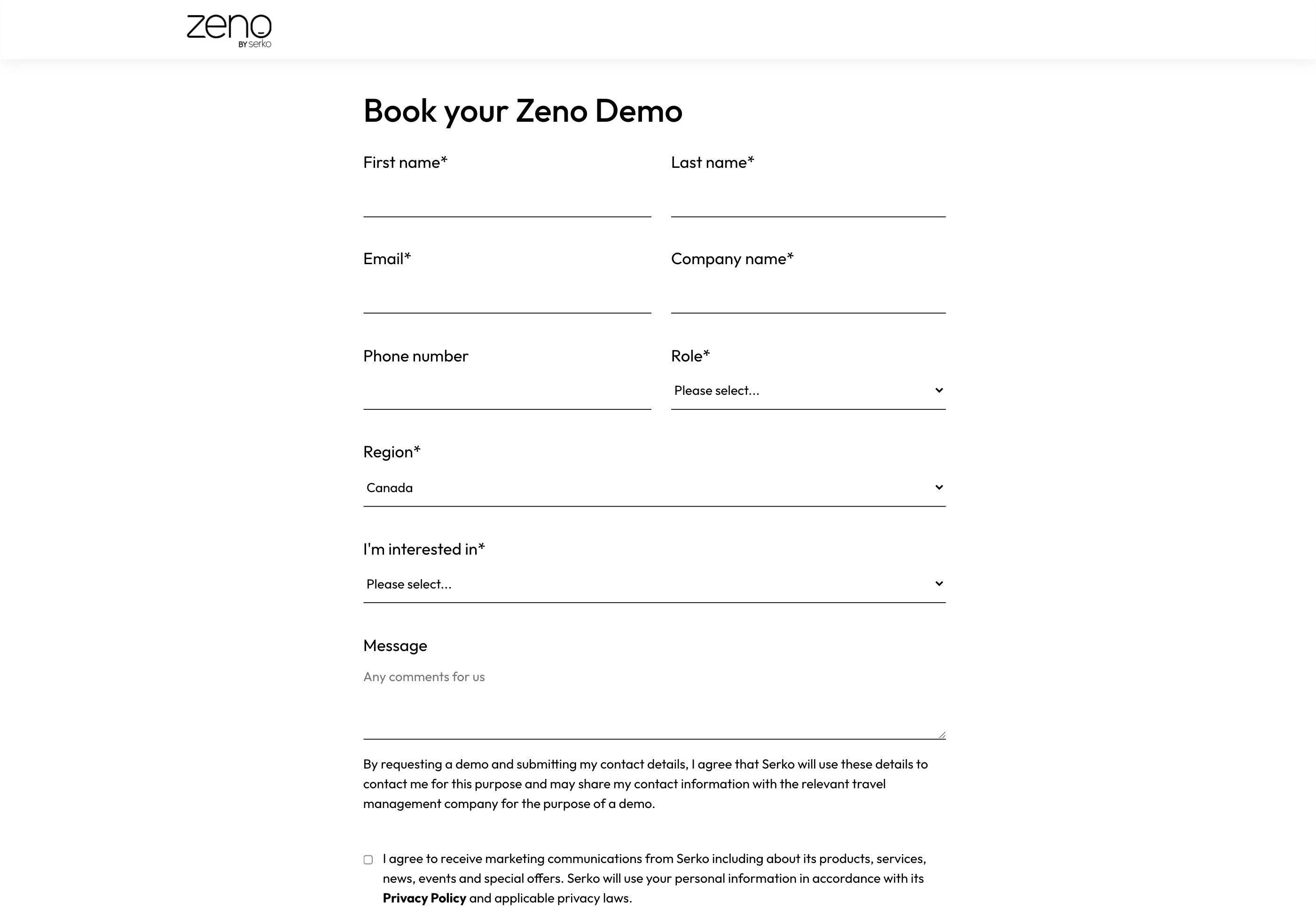
The page exists to produce one thing: a booked demo. But a demo has to reach the right team, and a travel manager in Australia and a procurement lead in the United States are not the same conversation. Role, region and interest are what make the lead routable.
Each of those fields also costs completions. So the form asks for exactly what routing needs and nothing that merely looks useful on a dashboard — qualification paid for one question at a time.
Engineering notes
No way out but the action
No primary navigation, no related links, no footer sitemap inviting a detour. The same call to action repeats at each point where a reader might have decided, phrased the same way every time. A landing page earns its conversion rate mostly by refusing to offer alternatives.
Proof under the costume
Each capability block states something a buyer can test: fares mixed across sources in a single itinerary, travellers self-serving instead of calling the agency, guests booked and reimbursed without being staff. The concept never has to be true; those sentences do.
Components, not a one-off
Campaign pages are usually built fast and abandoned faster. This one is assembled from the same components as the rest of the estate, so the next campaign starts from a system rather than from a designer opening a blank file — and a fix to a form field is a fix everywhere it appears.
Chapter Two
Entry · Closing Remarks
A campaign,
not a brochure.
✦
The result is a page that does one job without apologising for it. The concept gives a familiar role a moment of recognition, the capabilities give a sceptic something to check, and the form asks only what is needed to put the right person on the call.
Travel managers spend their working lives absorbing other people's travel problems, and almost no software addresses them directly. Speaking to that person, then getting out of their way, was the whole point of building it this way.