The same product, in several places.
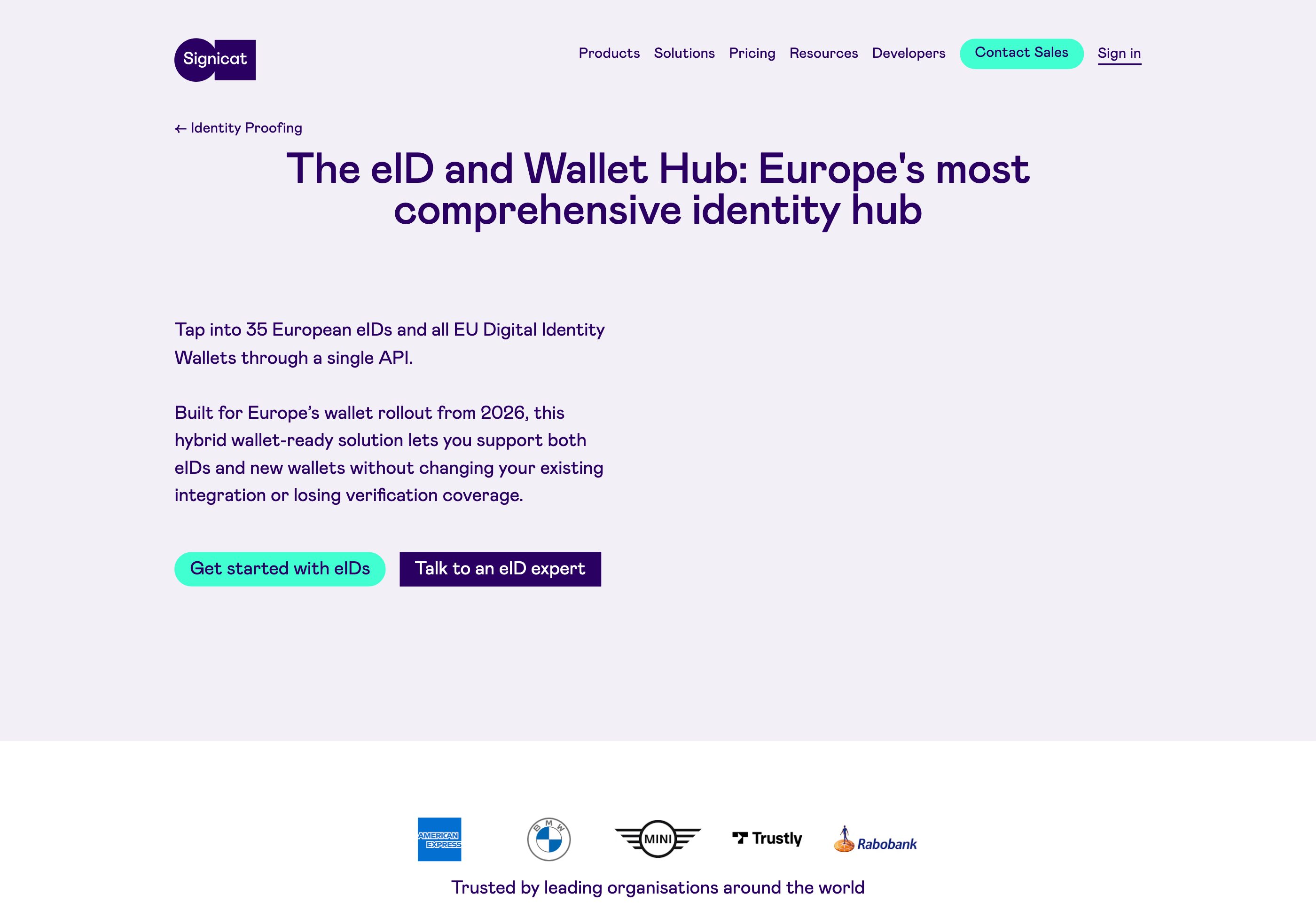
Signicat runs a digital identity platform used by more than 21,000 companies. It covers the whole span of a customer relationship — proving who someone is at onboarding, letting them log in afterwards, signing what they agree to, and orchestrating the checks in between — across 35 European eIDs behind a single API, with the EU wallet rollout landing from 2026.
UrbanIQ worked on signicat.com — the front-end build, the design system behind the product, industry and use-case pages, and the brand and messaging that decides how a regulated platform describes itself. The difficulty was never the number of products. It was that several of them belong in more than one place at once.
Chapter One
Entry · The Brief
One platform,
many front doors.
✦
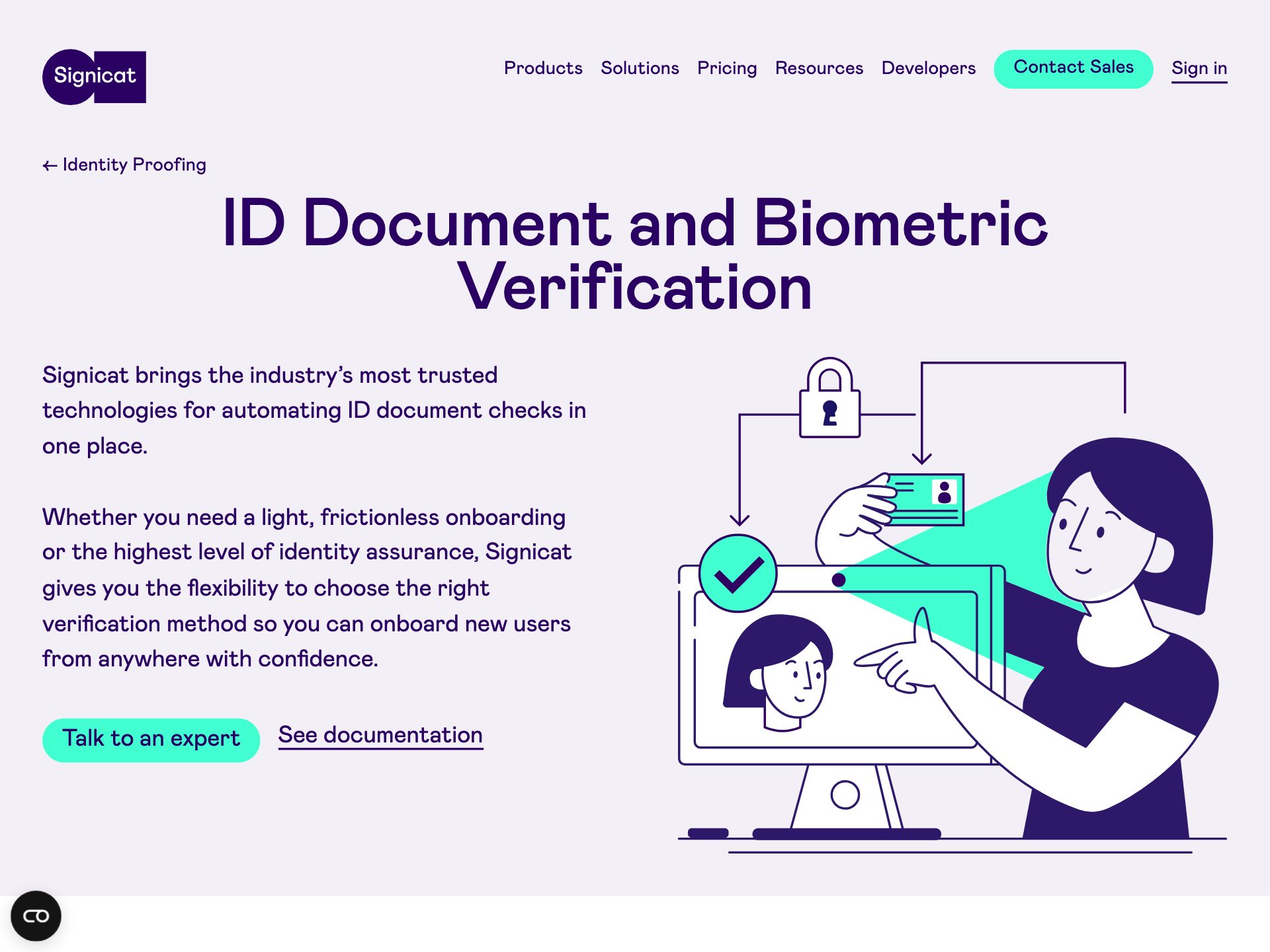
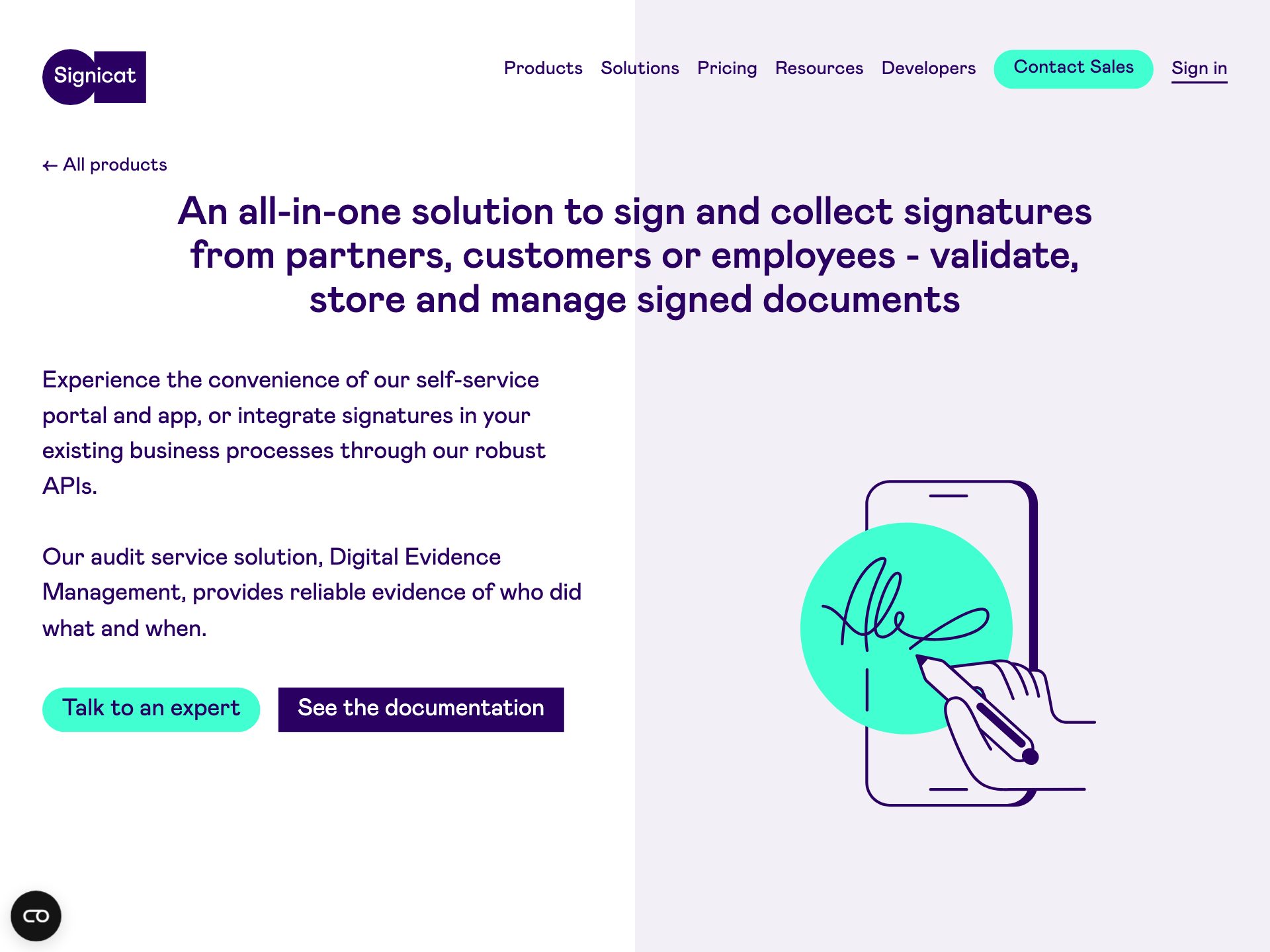
Look at the menu and the same names appear twice on purpose. The eID and Wallet Hub sits under Identity Proofing and under Authentication. ReuseID does the same. Digital Evidence Management belongs to both Trust Orchestration and Electronic Signing. That is not an untidy taxonomy — it is what happens when one capability answers two different jobs, and a bank arriving to solve onboarding should not have to know it is the same product a competitor found while solving login.
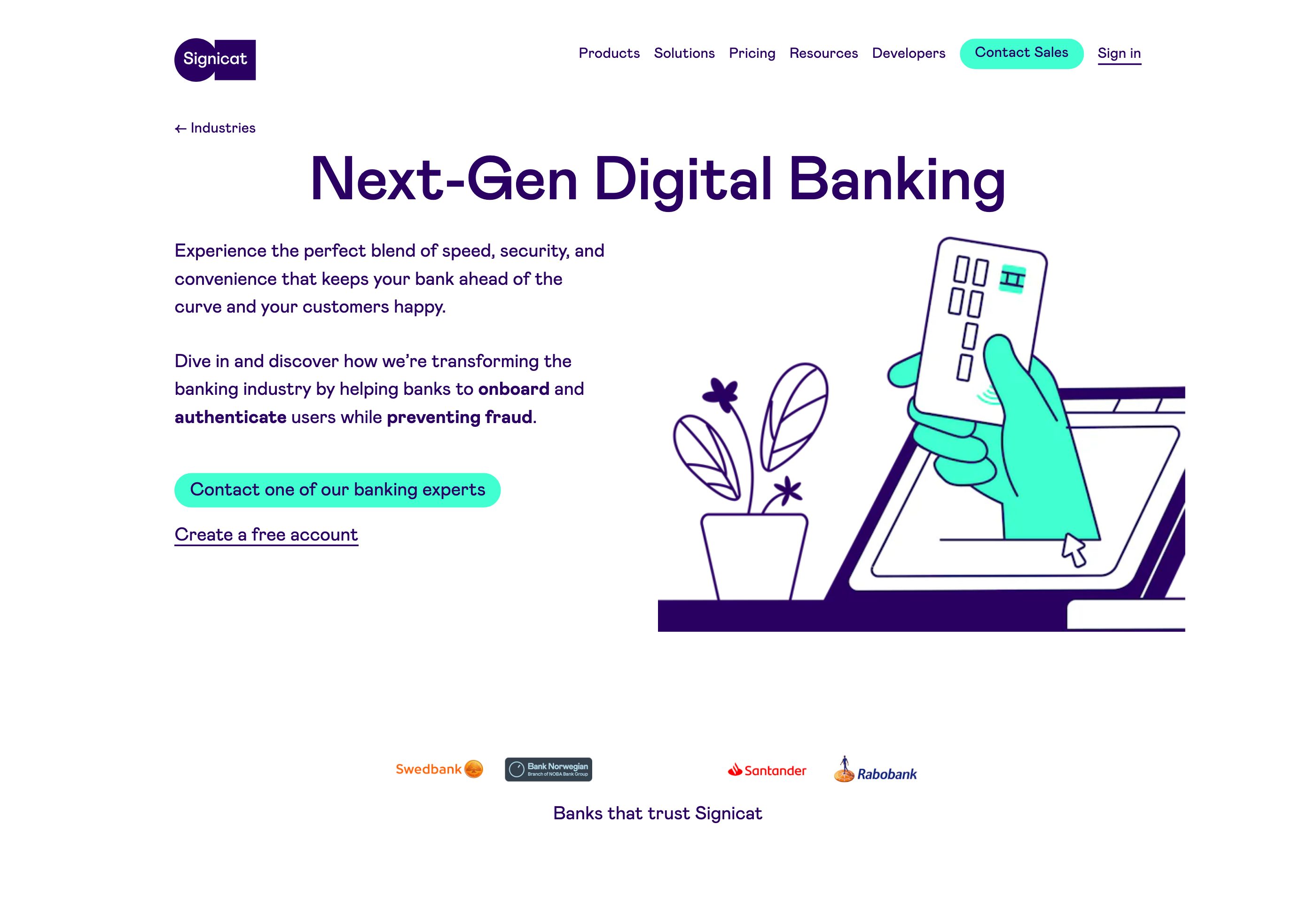
That pulls three ways at once: an information architecture where a product can live at several addresses without splintering into several products; industry and use-case pages that re-tell the platform for banking, insurance, mobility, gaming and payments without rewriting it each time; and copy precise enough for a compliance officer reading about KYC, AMLR or eIDAS. UrbanIQ worked across all three, and on keeping them coherent as the platform grew.
-
01
Node.Challenge Structure
One product, two categories.
Four product families, an overlapping set of capabilities beneath them, five industries and a list of compliance use cases on top. Duplicate a page so it can appear in two categories and the two copies drift within a quarter. Pick one home and the visitor who arrived by the other route never finds it.
The structure had to let a product keep one canonical page and several honest routes to it, so the menu can say the same name twice without the site meaning two different things.
-
02
Node.Challenge Precision
Words with legal weight.
In identity, the vocabulary is regulated. Verification is not authentication, an electronic signature is not a qualified one, and a claim about eIDAS conformance is a claim someone can be held to. The same page is read by a developer sizing an integration and a compliance officer checking whether a sentence would survive an audit.
So the copy stays exact where exactness is the product, and plain everywhere else. The site has to be readable without becoming loose.
Engineering notes
One page, several routes in
A capability that answers two jobs gets one page and two paths, not two pages. The menu, the breadcrumb and the related links change with the route taken; the substance does not. One source, so a correction lands everywhere it should and nowhere twice.
Industries that re-tell, not repeat
Banking, insurance, mobility, gaming and payments run on a shared skeleton, but the regulation, the named risks and the proof differ per sector and are written that way. A page that swaps only the industry noun into a template is obvious to the one person it was meant to convince.
Content built to be dated
Europe's wallet rollout starts in 2026, and the page says so. Copy pinned to a regulatory timetable has to be easy to find and easy to revise when the timetable moves — which means dates live in content, never in the design, and never in three places at once.
Chapter Two
Entry · Closing Remarks
A structure,
that holds as the rules move.
✦
The result is a site that carries a widening platform without duplicating itself. A new capability takes one page and as many routes as it earns, a new industry inherits the system rather than negotiating with it, and a product can move category without leaving a stale copy behind.
Signicat now reads as one platform with many honest entrances rather than a catalogue that repeats itself. For a company whose product is trust, and whose vocabulary is written down in regulation, saying the same thing everywhere was the whole point of building it this way.